Living With the Problems of Limescale
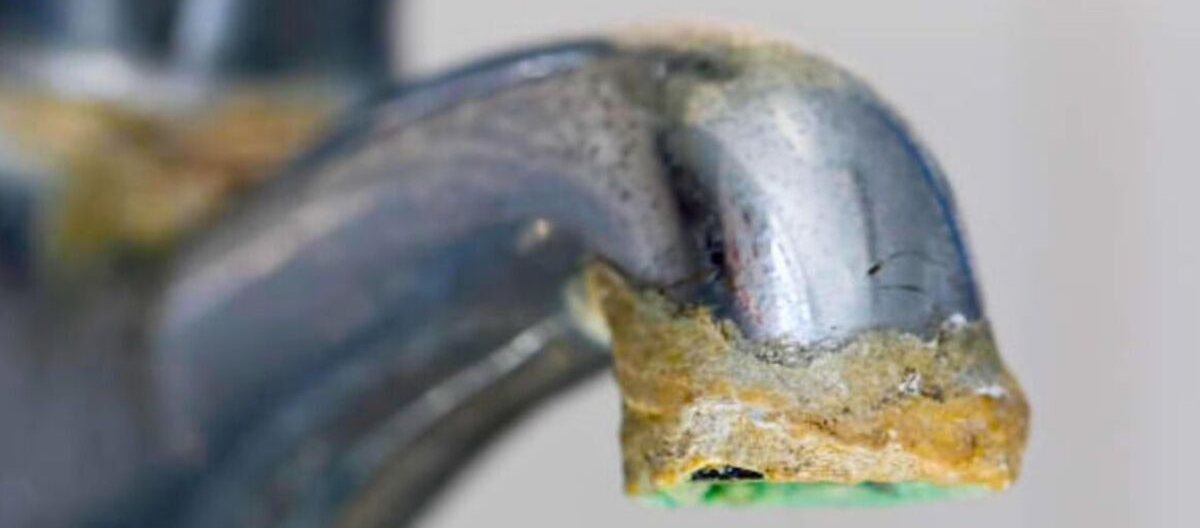
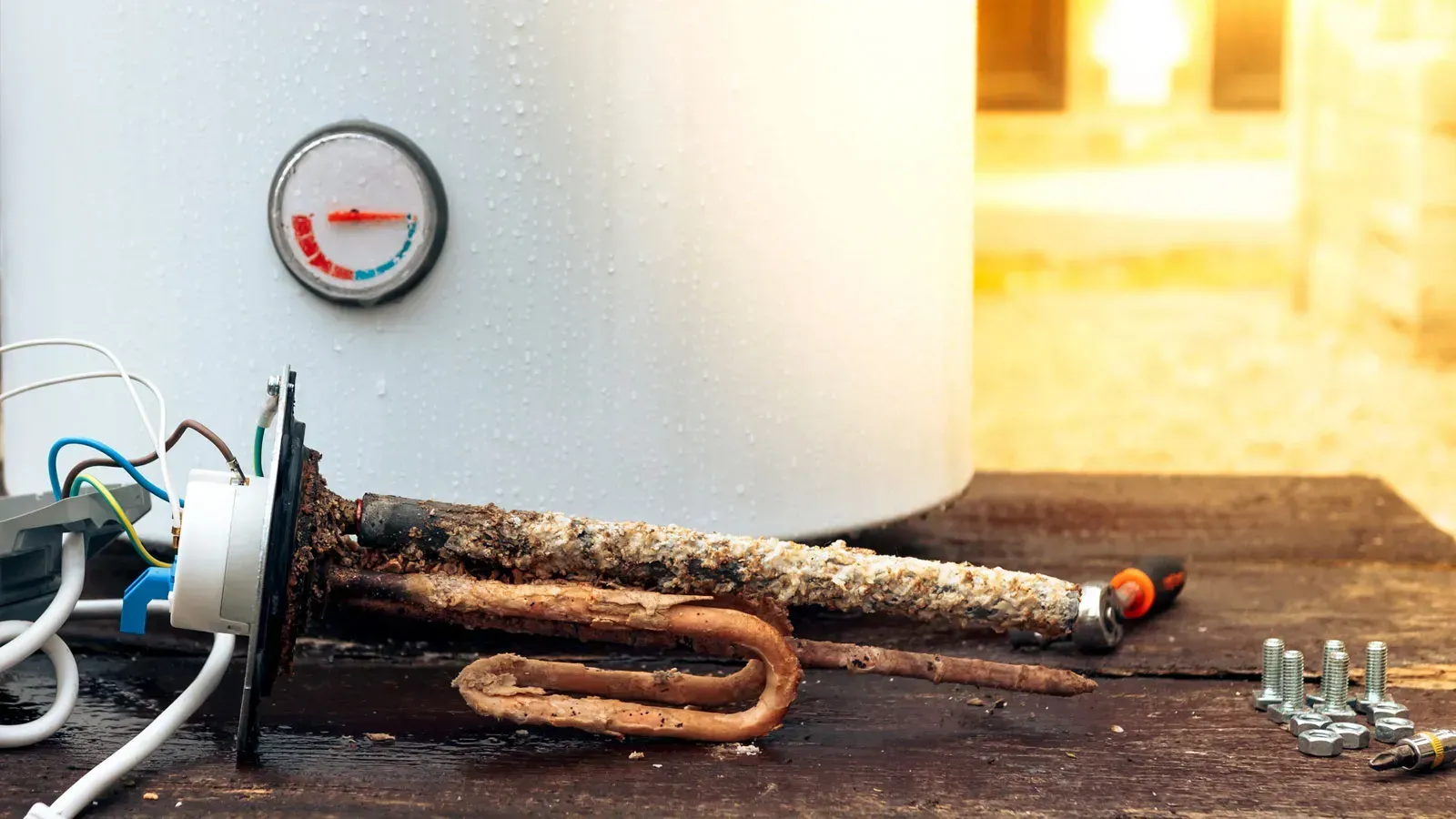
Limescale is one of the leading causes of inefficiency and premature failure in hot water cylinders, particularly in hard water areas.
For homeowners, it means higher energy bills, unreliable hot water, and unexpected repair costs. For installers and engineers, it remains one of the most common root causes of immersion heater failures, overheating incidents, and customer call-backs.
At Cotherm, we work closely with manufacturers, installers, and system designers to deliver reliable thermal control solutions.
This Guide Explains:
- What causes limescale in hot water cylinders
- How limescale affects immersion heaters
- How to recognise early warning signs
- The most effective ways to prevent and control scale buildup
⚡
Electrical Safety Warning
For safety reasons, it is always advised to use a
fully certified and fully insured professional
for any work involving electricity, heating elements, or hot water systems.
👉 Learn the top 10 causes for immersion heater failure:
🔗
www.cothermpil.co.uk/top-10-causes-of-immersion-heater-failure-in-hard-water-areas-uk-guide
What is Limescale and Why Does it Form on Immersion Elements?
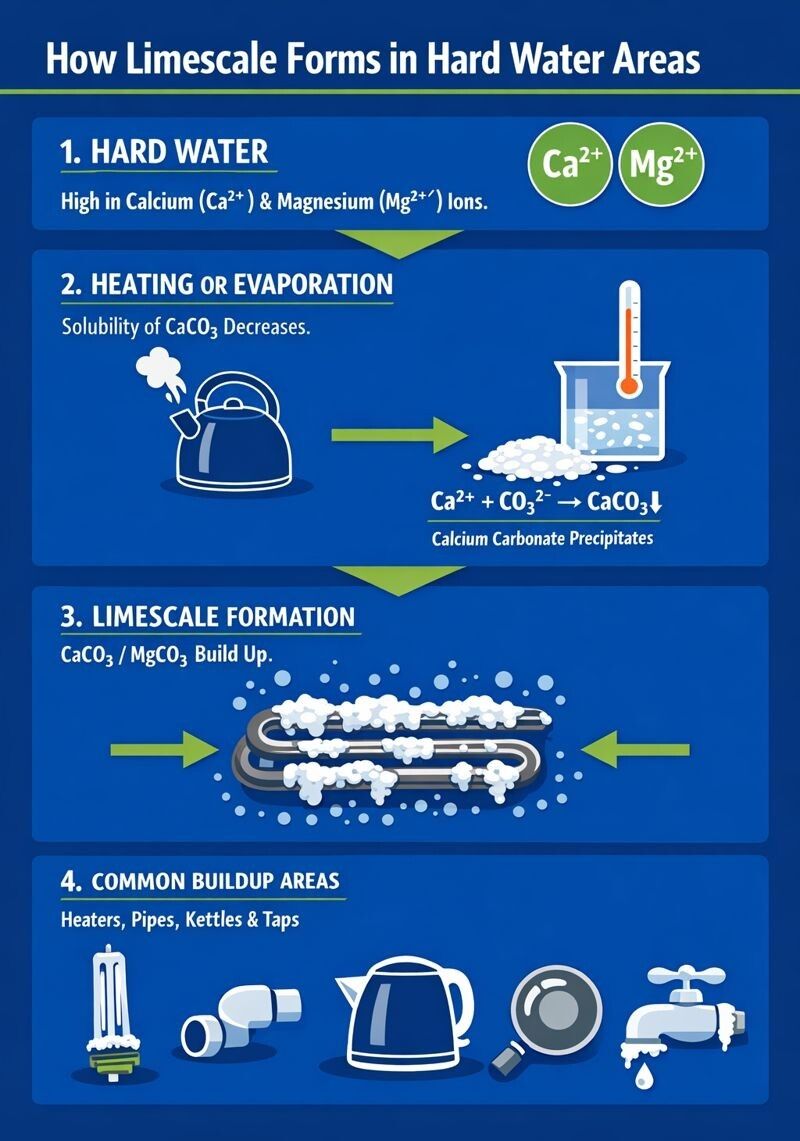
Limescale is basically calcium deposits left behind when hard water is heated.
Hard Water and Dissolved Minerals
In hard water areas, mains water contains high levels of dissolved calcium and magnesium bicarbonates. These minerals are:
- Invisible in cold water
- Naturally occurring
- More concentrated in borehole, spring, and well supplies
How Heat Triggers Limescale Formation
When water is heated inside a hot water cylinder:
- Calcium bicarbonate becomes chemically unstable
- It breaks down into calcium carbonate and carbon dioxide
- Calcium carbonate forms solid deposits (limescale)
- These deposits attach to hot surfaces
Once formed, calcium carbonate does not re-dissolve into water. Instead, it accumulates on:
- Immersion heater elements
- Cylinder walls
- Heat exchanger surfaces
- The bottom of the tank as sludge
Why Immersion Elements Attract Limescale
Immersion elements are the hottest components in a cylinder. High temperatures cause:
- Faster mineral separation
- Micro-boiling at the element surface
- Accelerated scale adhesion
Every heating cycle leaves a bit more scale behind. Given enough time, that builds up into a thick layer that acts like insulation, making it harder for heat to pass through and reducing the system’s efficiency.
👉 What we find in practice, is that the worst build-up is directly on the heating element, with sludge collecting at the bottom of the cylinder.
UK Hard and Soft Water Areas and Their Impact on Immersion Heaters Lifespan
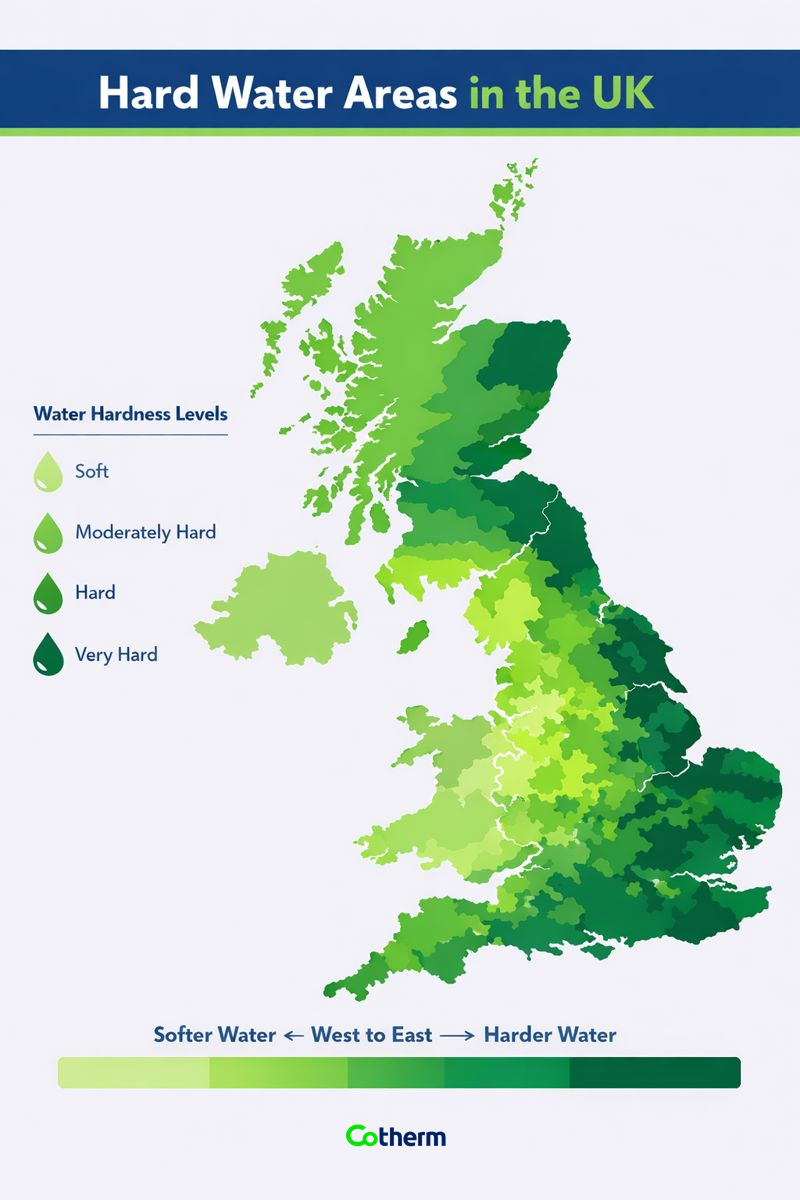
Water hardness varies significantly across the UK and plays a major role in limescale formation and immersion element reliability.
In general:
- Soft water areas include Western Scotland, Wales, Northern Ireland, and the North West.
- Hard and very hard water areas include London, the South East, East Anglia, and parts of the Midlands.
These regional differences are caused by local geology. Water flowing through chalk and limestone absorbs higher levels of calcium and magnesium, making it harder.
In hard water areas, these minerals form limescale more quickly when heated. This leads to faster insulation of heating elements, higher operating temperatures, increased thermal stress, and a greater risk of burnout.
As a result, immersion heaters in hard water regions typically experience higher failure rates and shorter service life compared to systems in soft water areas, where limescale formation is minimal.
Understanding local water hardness is an important part of selecting the right components and planning maintenance, helping to keep the system running efficiently over the long term.
How Limescale Affects Immersion Elements and Hot Water Systems:
1. Reduced Heat Transfer and Insulation
Limescale acts as an insulating layer. Because calcium carbonate is a poor conductor of heat:
- Heat is no longer transferred into the water as efficiently.
- The element must operate at higher temperatures
- Energy consumption increases
2. Overheating and Thermal Stress
As heat becomes trapped beneath scale:
- Element temperatures rise above design limits
- Internal resistance wires experience thermal fatigue
- Core insulation materials degrade
This significantly shortens the life of immersion heaters.
3. Accelerated Component Failure
Prolonged overheating can cause:
- Burnout of resistance coils
- Cracking of outer sheaths
- Insulation breakdown
- Activation of safety cut-outs
This is why immersion elements in hard water areas often fail prematurely.
4. Higher Energy Bills and Slower Heating
Limescale forces the system to work harder to achieve the same water temperature:
- Longer heat-up times
- Increased electricity consumption
- Reduced overall efficiency
Even moderate scale buildup can raise energy costs by a substantial margin.
5. Hot Spots and Localised Damage
Limescale does not form evenly. Thick patches create hot spots where:
- Temperatures exceed safe operating limits
- Pinholes can develop in the element sheath
- Water enters and rapidly turns to steam
Because steam expands up to 1,700 times the volume of water, this process can cause sudden element rupture.
📌
In our experience, hot spots caused by uneven limescale build-up are one of the most common, and the most damaging causes of immersion heater element failure, particularly in hard water areas.
6. Secondary System Damage
Detached scale particles may:
- Settle at the base of the cylinder
- Cover thermostats and sensors
- Interfere with heat exchangers
- Disrupt temperature control
These issues affect system reliability and comfort.
How to Identify Element Limescale Problems in a Hot Water Cylinder
As most cylinders are sealed systems, internal inspection isn’t straightforward. However, there are several signs that can indicate limescale build-up.
Common Symptoms of Limescale
- Longer heating times
Water takes noticeably longer to reach temperature - Higher energy bills
Increased costs without changes in usage - Noises during heating
Crackling, rumbling, or kettling sounds - Hot water running out quickly
Premature thermostat shutdown - Fluctuating water temperature
Uneven heating and poor stratification - Repeated element failures
Frequent burnout or safety cut-out activation - Visible scale during maintenance
Chalky white deposits on elements - Cloudy or discoloured hot water
Suspended scale particles
📌 Early detection helps prevent costly repairs and system downtime.
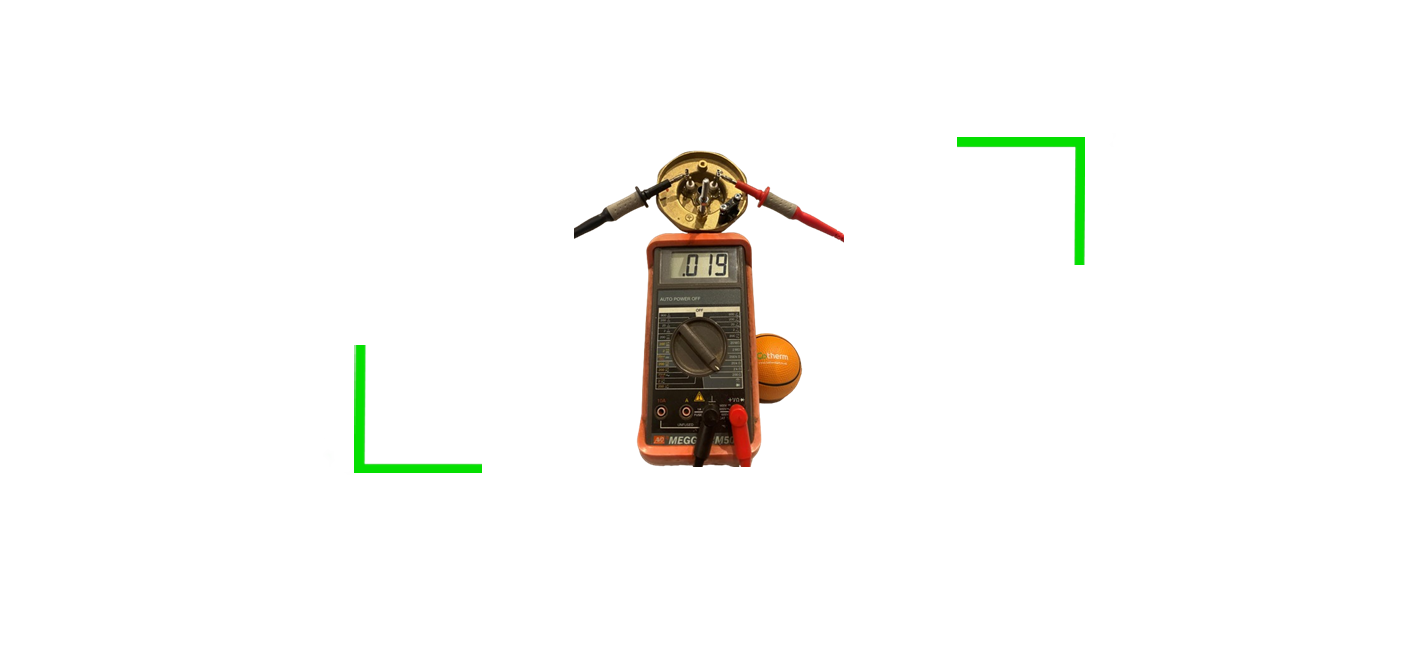
If you suspect your element may be failing due to scale buildup, our guide on how to test if a hot water cylinder’s immersion element is faulty walks through safe diagnostic checks.
🔗
How to test if a hot water cylinder’s immersion element is faulty
How to Prevent and Control Limescale on Immersion Heater Elements
Effective limescale management requires a combination of prevention, maintenance, and component selection.
1. Install a Water Softener
Ion-exchange water softeners are the most reliable method for preventing limescale.
They work by removing calcium and magnesium ions and replacing them with sodium ions, preventing scale formation before water enters the cylinder.
Benefits of Water Softeners:
- Protects heating elements, cylinders, boilers, and pipework
- Improves heating efficiency
- Extends component lifespan
- Reduces maintenance requirements
- Improves appliance performance
For properties in hard water areas, water softeners provide system-wide protection.
2. Schedule Regular Descaling and Maintenance
Preventative maintenance reduces accumulated scale and debris.
Recommended actions include:
- Full cylinder flushing
- Professional chemical descaling
- Removal of sludge and sediment
- Inspection of heating elements and sensors
Routine servicing maintains optimal performance and reduces failure risk.
3. Optimise Thermostat Settings
Operating temperature strongly influences scale formation.
- Reduce heating temperatures.
- Lower temperatures slow mineral precipitation
- Use periodic high-temperature anti-legionella cycles to ensure water safety.
Balanced temperature management improves efficiency and safety.
4. Control Heating Cycles
Avoid unnecessary overheating by:
- Using timed heating schedules
- Preventing continuous operation
- Matching heating cycles to usage patterns
This reduces thermal stress and scale acceleration.
5. Choose Limescale Resistant Immersion Elements
Material selection plays a critical role in durability as the different metals behave differently.
- Limescale sticks easily and firmly to Copper elements, and over time thick scale will build up
- On the smoother surfaced Incoloy elements the scale still forms, but not as tightly bonded as on copper
- Titanium elements form a natural “shield” layer which scale has trouble bonding to, the scale forms slowly and loosely, and often flakes off
Low Watt Density Elements
Low watt density elements distribute heat over a larger surface area, resulting in:
- Lower surface temperatures
- Reduced scale adhesion
- Longer service life
They are especially effective in hard water environments.
Common Heating Element Materials
Material selection plays a key role in how well a heating element resists limescale and how long it lasts.
Best Practices for Limescale Management
For maximum system performance and longevity, Cotherm recommends:
- Installing a high-quality water softener
- Reduce thermostat temperature settings whilst being aware of maintaining anti-legionella cycles
- Using low watt density, corrosion-resistant elements
- Scheduling routine cylinder servicing
- Monitoring energy consumption patterns
Limescale is more than a cosmetic issue, using this integrated approach delivers:
- Higher Energy efficiency
- Reduces environmental impact
- Lowers operating & maintenance costs
- Improves system reliability & reduces breakdowns
- Extends equipment lifespan
📌 Keeping scale under control helps the system last longer and keeps hot water performance steady, rather than gradually dropping off over time.
Balancing Limescale Prevention and Legionella Protection
Lowering the operating temperature of an immersion heater reduces limescale buildup because the calcium and magnesium in the hard water are less likely to form solid deposits when water is heated more gently. This means:
- Less scale sticks to the heating element
- Scale builds up more slowly
- The system runs more efficiently over time
However, water kept too cool for long periods can allow Legionella bacteria to survive and multiply. To balance efficiency and safety, systems use periodic high-temperature disinfection cycles to control bacteria while limiting long-term limescale accumulation.
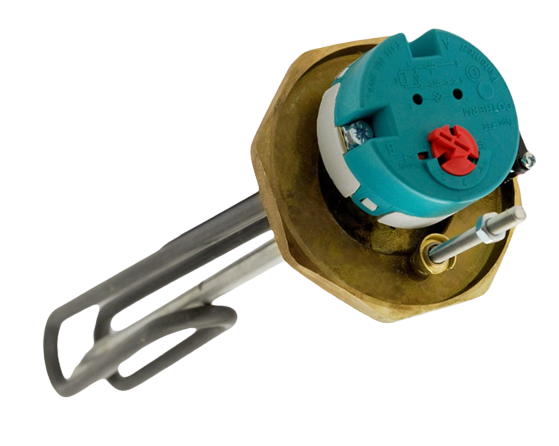
One simple and low-cost solution is the Cotherm PIL, which automatically monitors water temperatures and initiates an anti-legionella cycle if the cylinder has not reached a safe level for 21 days.
👉 More information is available at:
🔗 www.cothermpil.co.uk/product-information-environmental-smart-water-heating-technology
Cotherm: Supporting Reliable Water Heating Systems
At Cotherm, we design and manufacture advanced thermostatic controls, immersion heater elements, and thermal safety solutions for domestic and commercial water heating systems.
Our products are engineered to perform reliably, even in challenging hard water conditions, when combined with proper system management.
Explore our technical resources to learn more about optimising your hot water system or contact our team for expert guidance.
Best Practices for Managing Limescale on Immersion Heater Elements
Questions & Expert Answers on Limescale and Immersion Heater Elements
Clear answers from a professional:
What are the main signs of limescale buildup in a hot water cylinder?
Typical signs include:
- Rumbling or kettling noises
- Slow water heating
- Temperature fluctuations
- Frequent element failures
- White chalky deposits on removed elements
These symptoms suggest internal limescale accumulation.
What causes limescale to form on immersion heater elements?
Limescale forms when hard water is heated. Heat turns dissolved calcium and magnesium minerals into solid calcium carbonate, which sticks to hot surfaces inside the cylinder.
Does lowering the thermostat temperature reduce limescale buildup?
Yes. Lowering the thermostat temperature slows down limescale formation on the immersion element, while higher temperatures accelerate mineral separation.
However, keeping water too cool for long periods can allow Legionella bacteria to grow, so systems use periodic high-temperature disinfection cycles to maintain safety while limiting long-term limescale buildup.
A simple, low-cost solution is the Cotherm PIL, which monitors water temperature and automatically runs an anti-legionella cycle if safe levels have not been reached within 21 days.
Can limescale increase my energy bills?
Yes. Limescale reduces heat transfer, meaning the immersion heater must run longer and hotter.
This can significantly increase electricity consumption and running costs.
What is the best way to prevent limescale in a hot water cylinder?
The most effective methods are:
- Installing a water softener
- Using low watt density immersion heaters
- Maintaining correct thermostat settings
- Regular servicing and flushing
This combination provides long-term protection.
Why does my immersion heater keep burning out or tripping the fuse?
Repeated burnout is usually caused by limescale build-up on the heating element.
Limescale insulates the element, traps heat, and causes overheating, which leads to internal damage and electrical failure.
There could be other reasons, so be safe and call a professional.
Can I fix limescale problems myself or should I call a professional?
If you are qualified or competent to carry out the work, you may be able to manage minor limescale build-up through basic cleaning or routine maintenance.
However, persistent or severe limescale should be handled by a qualified engineer. Professional servicing ensures electrical and mechanical safety, protects system components, and helps prevent further damage or premature failure.
⚡ Electrical Safety Warning!
For safety reasons, it is always advised to use a fully certified and fully insured professional for any work involving electricity, heating elements, or hot water systems.