The Complete UK Guide to Immersion Heater Failure in Hard Water Areas, And How to Help You Prevent Them.
Top 10 Causes of Immersion Heater Failure in Hard Water Areas (UK Guide)
Hard water is one of the most common causes of immersion heater failure in the UK. In regions with high mineral content, heating elements, thermostats, and cylinders are exposed to extreme thermal and chemical stress.
For homeowners, landlords, and heating engineers, understanding why immersion heaters fail in hard water areas is key to preventing breakdowns, reducing maintenance costs, and extending system lifespan.
This guide explains the
top 10 causes of immersion heater failure in hard water areas, how limescale affects heating components, and the best ways to reduce failures through correct specification, installation, and component selection.
In This Guide:
- The 10 most common causes of immersion heater element failure in hard water areas
- Where the UK’s hard water areas are, and why they occur
- How limescale damages immersion heaters
- Best installation practices for installers and engineers
- How the right component choice can extend component life and reduce failure risk
- Summary of how to prevent immersion heater failure and extend lifespan
- FAQs on immersion heater failures, Limescale and Hard Water Solutions
The Top 10 Reasons:
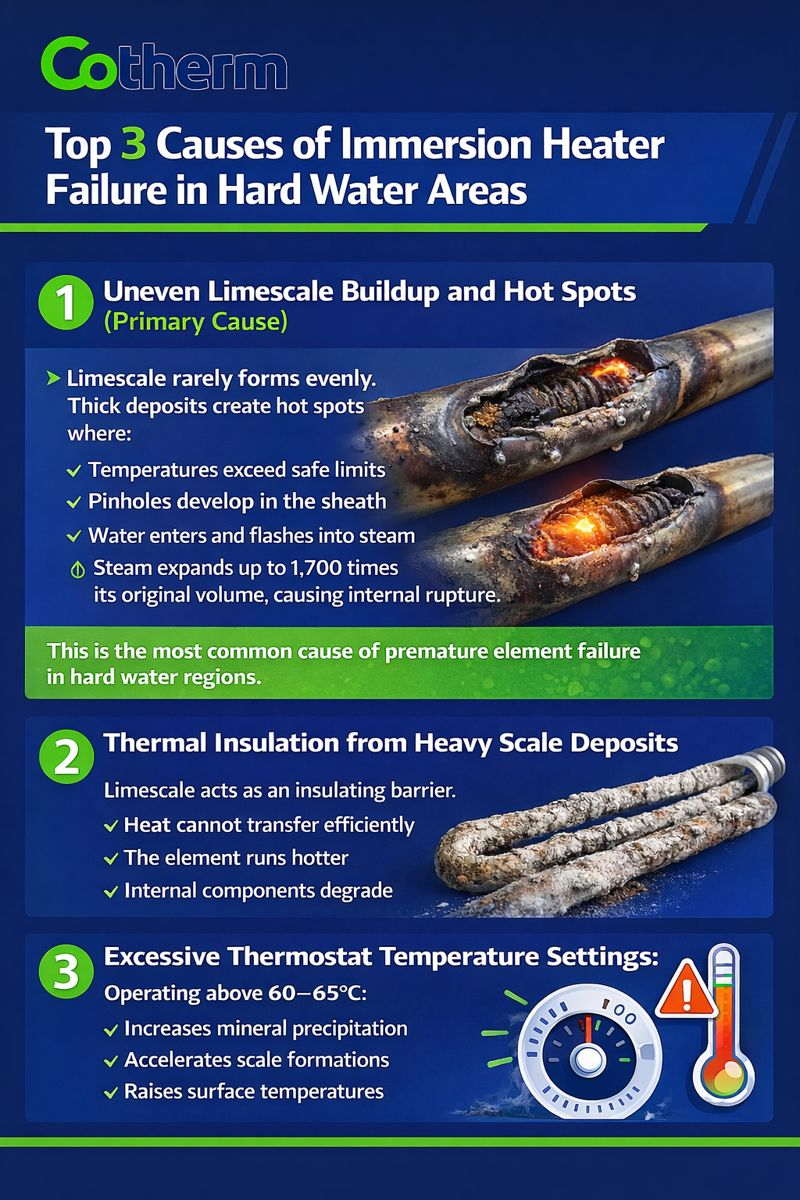
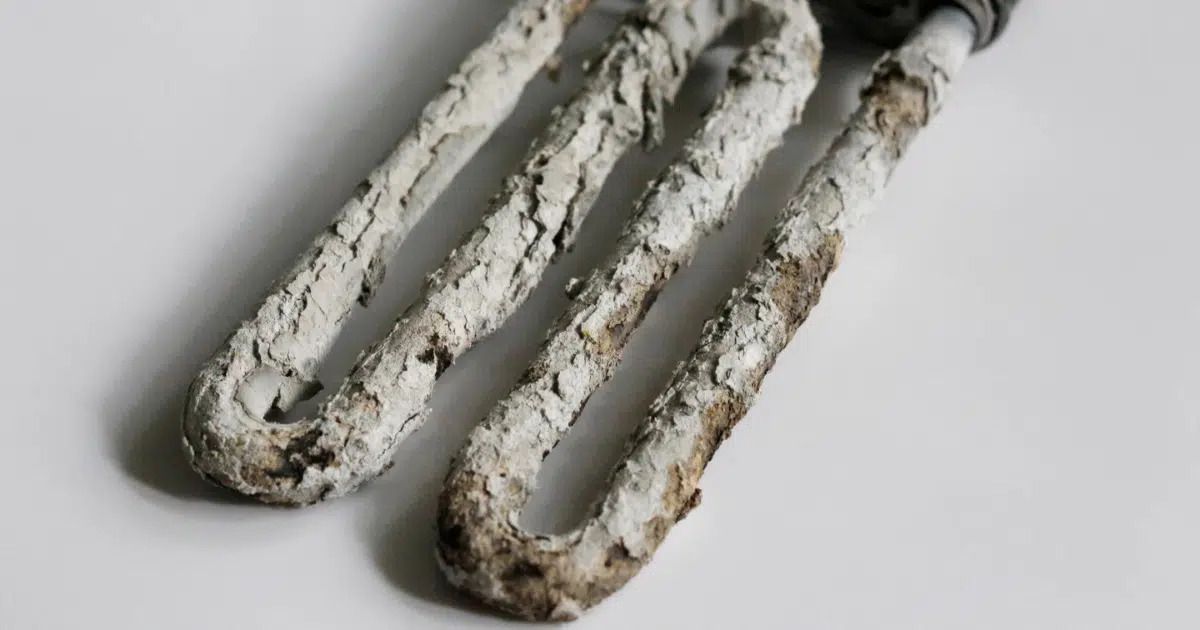
1. Uneven Limescale Buildup and Hot Spots (Primary Cause)
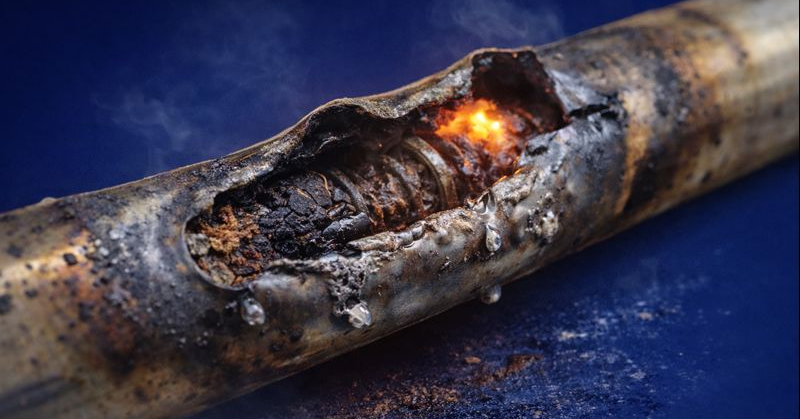
Limescale rarely forms evenly. Thick deposits create hot spots where:
- Temperatures exceed safe limits
- Pinholes develop in the sheath
- Water enters and flashes into steam
Steam expands up to 1,700 times its original volume, causing internal rupture.
This is the
most common cause of premature element failure in hard water regions.
2. Thermal Insulation from Heavy Scale Deposits
Limescale acts as an insulating barrier.
As a result:
- Heat cannot transfer efficiently
- The element runs hotter
- Internal components degrade
Prolonged insulation accelerates burnout and fatigue.
3. Excessive Thermostat Temperature Settings
Operating above 60–65°C:
- Increases mineral precipitation
- Accelerates scale formation
- Raises surface temperatures
High setpoints dramatically shorten element life in hard water systems.
👉
Learn more:
🔗
How to correctly test an immersion thermostat
4. Use of Low-Quality or Incompatible Elements
Standard copper and low-grade alloy elements:
- Attract more scale
- Corrode faster
- Degrade under heat stress
Titanium elements offer superior performance and are less susceptible to limescale build-up in harder, mineral-rich water.
5. High Watt Density Heating Elements
High watt density = high surface temperature.
This leads to:
- Faster scale adhesion
- Severe hot spot formation
- Increased thermal stress
Low watt density elements distribute heat more evenly and last longer.
6. No Water Softening or Scale Control
Without water treatment:
- Minerals enter untreated
- Scale forms continuously
- Failure risk increases exponentially
Properties without softeners experience significantly higher failure rates.
7. Lack of Routine Maintenance and Descaling
Many cylinders receive no preventative maintenance.
This causes:
- Sludge buildup
- Restricted circulation
- Sensor obstruction
- Reduced efficiency
Neglected systems fail years earlier than serviced systems.
8. Sediment and Sludge Accumulation
Detached limescale settles at the cylinder base and around elements.
This:
- Restricts convection
- Traps heat
- Creates uneven heating zones
Partially buried elements overheat locally.
9. Electrical Connection Degradation
Excessive operating temperatures damage:
- Terminal insulation
- Contact surfaces
- Cable sheathing
Loose or oxidised terminals increase resistance and cause further overheating.
Where Are the UK’s Hard Water Areas — and Why Do They Exist?
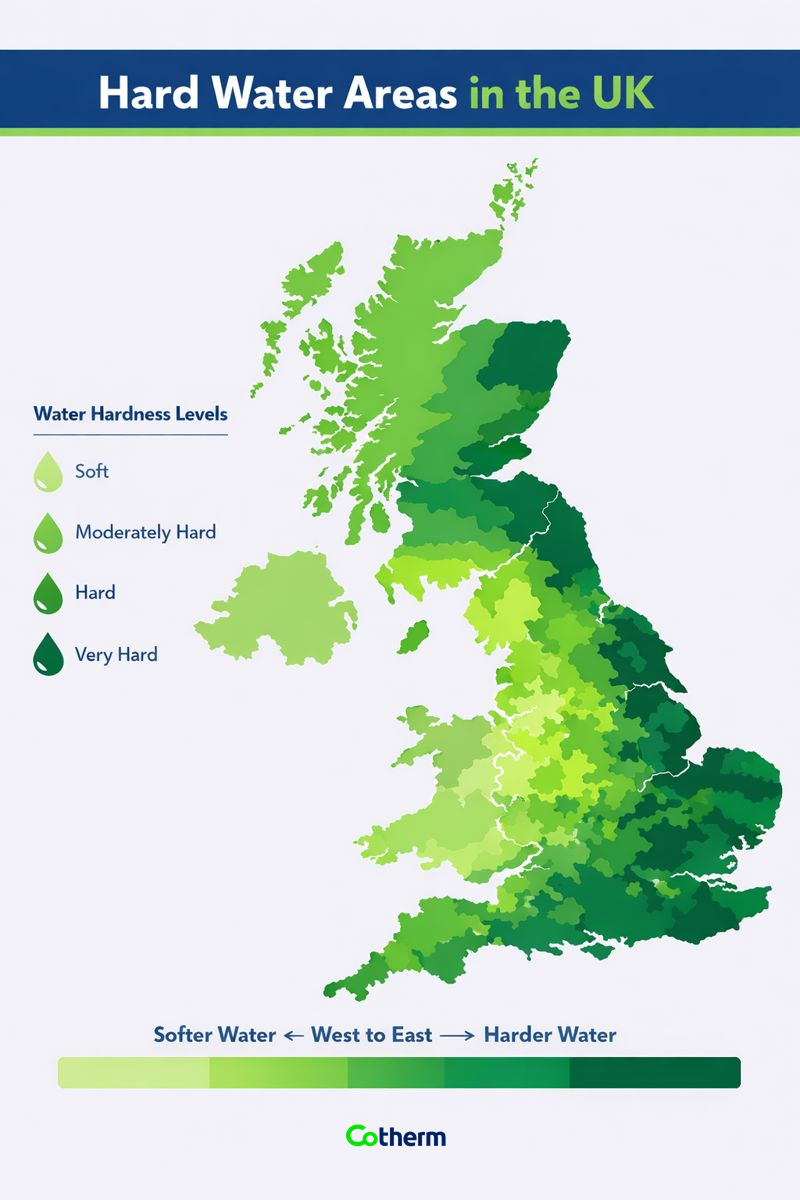
Hard water is most common in
Southern and Eastern England, including London, the South East, East Anglia, and parts of the Midlands. These regions sit on chalk and limestone bedrock, which dissolves into groundwater as it passes through, increasing calcium and magnesium content.
Softer water is typically found in
Wales, Scotland, the North West, and South West England, where underlying rock is mainly granite, slate, or sandstone that does not release minerals.
Because homes in hard water regions receive naturally mineral-rich water, hot water systems in these areas are far more prone to limescale buildup, overheating, and accelerated immersion heater failure.
👉 See infographic below for regional water hardness levels across the UK.
Why Hard Water Shortens Immersion Heater Life
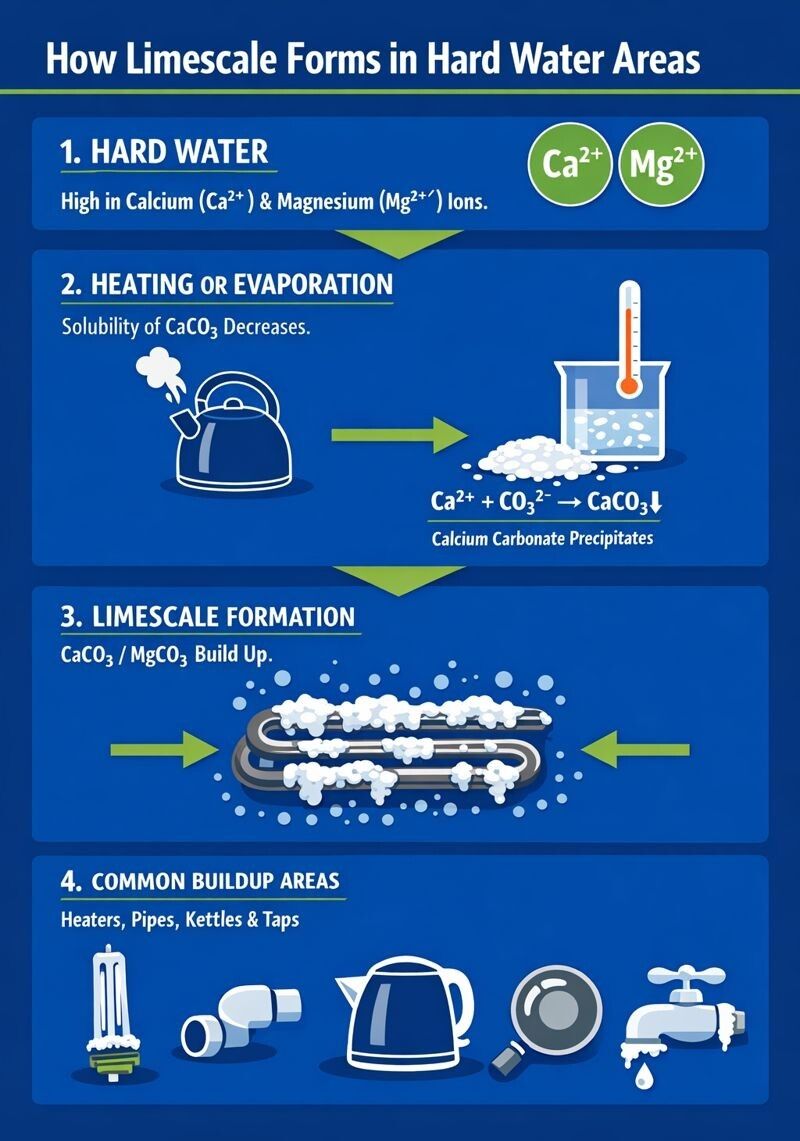
Hard water contains dissolved calcium and magnesium bicarbonates. When heated, these minerals convert into solid calcium carbonate (limescale), which:
- Bonds to heating elements
- Insulates hot surfaces
- Creates uneven temperature zones
- Restricts heat transfer
Over time, this leads to overheating, mechanical damage, and electrical failure.
👉
Related reading:
🔗
Limescale buildup in hot water cylinders: causes, effects, identification and solutions
Scroll Across To See Full Table
→
Best Practice for Installers and Engineers
For long-term reliability in hard water areas, Cotherm recommends:
✔ System Design
- Use low watt density elements
- Specify Incoloy or titanium where appropriate
- Ensure correct element positioning
✔ Temperature Control
- Reduce thermostat temperatures and use periodic high-temperature anti-legionella cycles
- Avoid continuous overheating
- Use timed heating schedules
✔ Water Quality Management
- Install ion-exchange water softeners
- Recommend scale management where softeners are impractical
✔ Maintenance Programmes
- Schedule periodic flushing
- Inspect elements and sensors
- Remove sludge and sediment
✔ Electrical Integrity
- Ensure terminals correctly connected
- Inspect insulation
- Replace heat-damaged connectors
👉 These practices significantly reduce warranty claims and repeat call-outs.
Why Choose Cotherm Components
Cotherm immersion controls and thermostats are engineered for:
✔
Thermal stability
✔Precise temperature regulation
✔Long service life
✔ Compliance with UK safety standards
When combined with correct installation and maintenance, they deliver industry-leading reliability.
Cotherm has 75+ years of experience and a global presence with production and sales facilities worldwide. Their thermostats and heating elements are engineered for safety, reliability and energy efficiency — making them a trusted choice for heating control solutions.
A great solution:
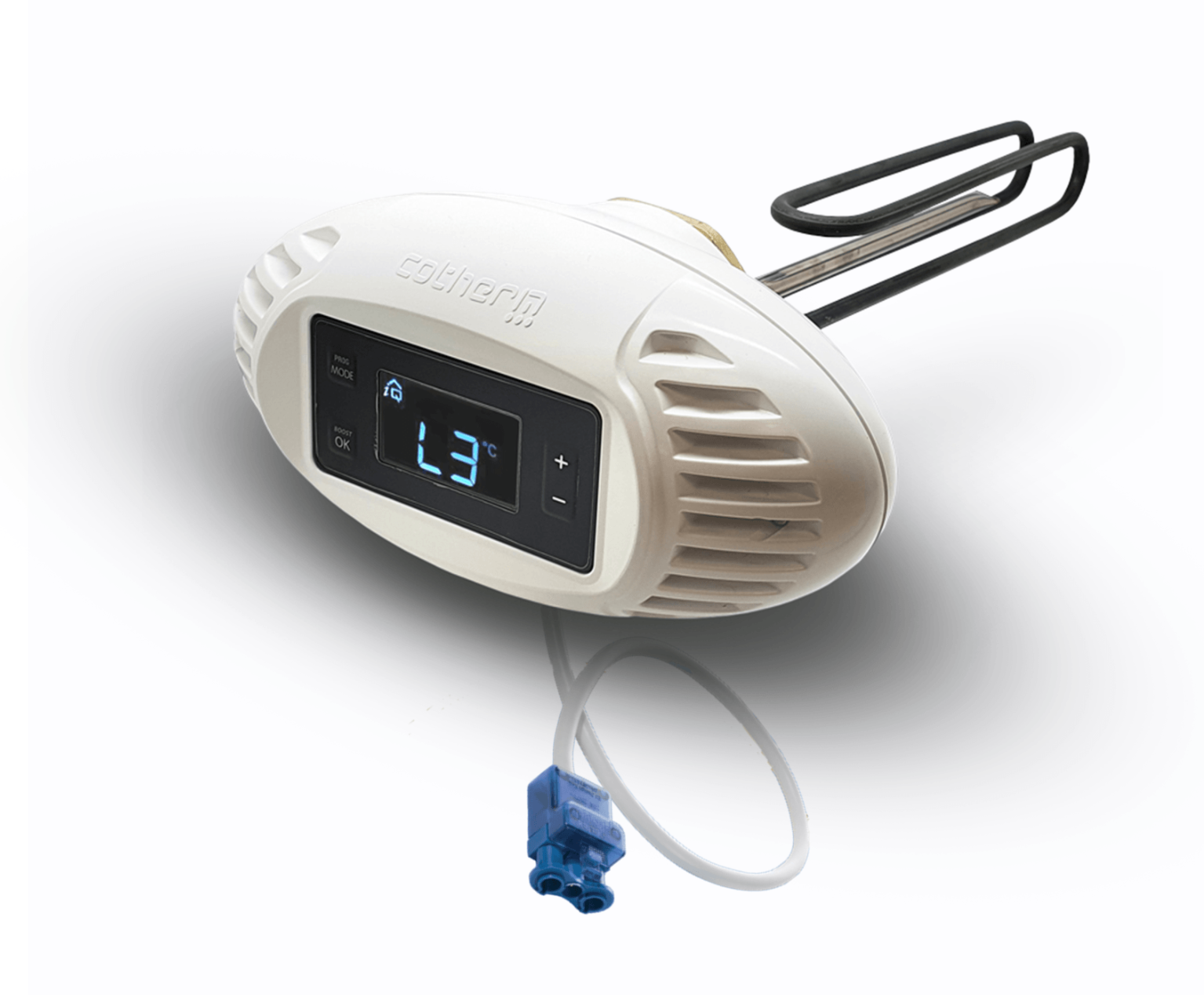
The Cotherm PIL offers a simple to install, low-cost way to reduce limescale by limiting unnecessary heating, which extends component lifespan, lowers energy use, and improves environmental performance, while maintaining safety by monitoring water temperatures and triggering an anti-legionella cycle if safe levels are not reached within 21 days.
👉
More information is available at:
🔗
www.cothermpil.co.uk/product-information-environmental-smart-water-heating-technology
Summary of How to Prevent Immersion Heater Failure
FAQ: Immersion Heater Failures, Limescale and Hard Water Solutions
This section covers the most common questions about immersion heater failures, limescale, and hard water. Find clear, practical answers to help you prevent damage and keep your hot water system running efficiently.
What is the main cause of immersion heater failure in hard water areas?
The most common cause of immersion heater failure in hard-water areas is limescale buildup.
When hard water is heated, dissolved minerals form deposits of Calcium carbonate on the heating element, and these deposits rarely form evenly.
Thick patches create hot spots where temperatures exceed safe limits, pinholes develop in the metal sheath, and water can enter the element and flash into steam, leading to failure.
Are low watt density elements better in hard water?
Yes. Low watt-density immersion heater elements generally perform better in hard-water areas.
They operate at lower surface temperatures and resist scale adhesion.
How often should a hot water cylinder be serviced?
In hard water areas, inspection and flushing every 2–3 years is recommended.
Is there something I can buy to protect my hot water system from limescale?
Yes. The most effective option is a water softener, which removes the minerals that cause limescale before they enter your heating system. This helps protect cylinders, pipework, and immersion heater element.
Install a Cotherm PIL, which reduces unnecessary overheating while automatically maintaining safe water temperatures. This slows scale formation, increases system component lifespan and improves heating efficiency.
When replacing an immersion heater, upgrading to an Incoloy or titanium element is recommended, as these materials are more resistant to limescale and heat damage than standard copper.
For best protection, combine water softening, Cotherm PIL controlled heating, and high-quality elements.
Can limescale cause electrical faults?
Yes. Overheating damages terminals, insulation, and connections.
Do water softeners prevent element failure?
Yes—water softeners can significantly reduce immersion heater element failure, especially in hard-water areas, by removing calcium and magnesium before scale can form.
However, they reduce the risk rather than completely eliminate it.
Should I repair scale damage myself?
Minor cleaning may be possible if competent, but professional servicing ensures safety and prevents further damage.
⚡ Electrical Safety Warning
For safety reasons, it is always advised to use a fully certified and fully insured professional for any work involving electricity, heating elements, or hot water systems.
Why are there hard and soft water areas in the UK?
Water hardness is determined by dissolved calcium and magnesium.
In the UK, hard water is common in Southern and Eastern England (chalk and limestone areas), while soft water is found in Scotland, Wales, and parts of the North and South West (granite and slate areas).
Hard water increases limescale buildup, which can affect cylinders, immersion heaters, boilers, and pipework.
Knowing your local water hardness helps choose the right equipment and preventative solutions, like water softeners or low-watt-density elements.